
Members of the National Breath of Life team recently traveled to Larrakia Country in the Northern Territory of Australia for the PULiiMA Indigenous Language and Technology conference, to contribute to a global conversation about the tools and policies necessary to document, protect, and teach languages.
akooka weenswiaani ‘my name is Stella Beerman’ and I’m the communications specialist for the Myaamia Center, the institutional home of National Breath of Life (BoL). I was fortunate enough to travel with Gabriela Pérez Báez, co-director of National BoL, to Darwin in Larrakia Country, to document our experiences as Gabriela presented on the evolution of National BoL over the last few years.
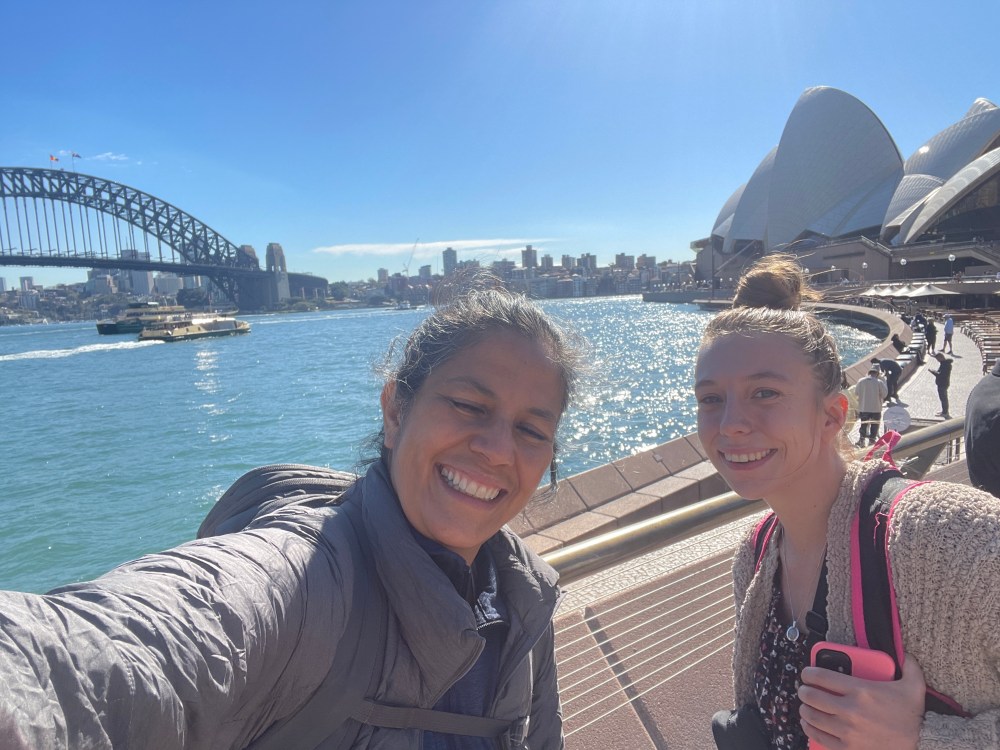
Photo by Gabriela Pérez Báez, National Breath of Life.
The PULiiMA conference is a biennial event aimed at bringing people together across Australia and internationally to explore project ideas, products, and equipment for community-based Indigenous language projects.
This conference wasn’t about linguistics, but instead about the tools and resources available to make documenting, accessing, and learning Indigenous languages easier. The conference focused on coming together to share knowledge with an emphasis on the strength that comes from working together.
This year the conference hosted close to 1000 participants, who all share common goals of conserving, using, and celebrating languages. While Aboriginal Australians and Torres Strait Islander people made up the majority of attendees, guests and speakers from around the world gathered to share experiences, knowledge, and resources to strengthen their languages.
The conference hosted the Launch of Australia’s International Decade of Indigenous Languages and National Action Plan, which “acknowledges the precarious state of First Nations languages across Australia and the coordinated effort needed to safeguard them for the future.”
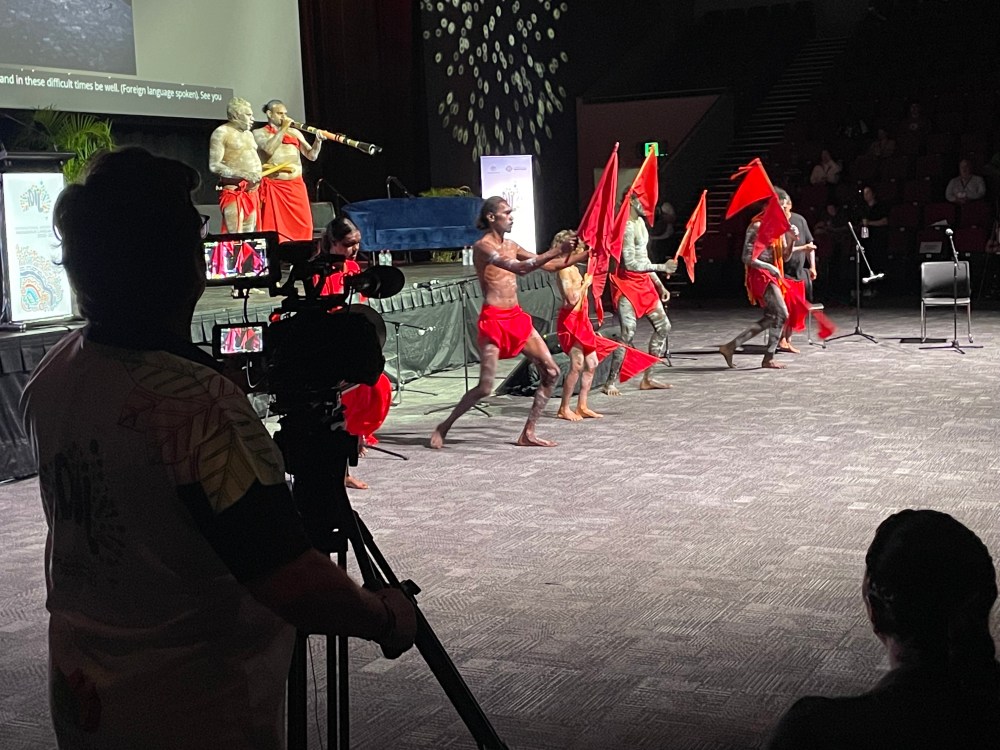
Photo by Stella Beerman, Myaamia Center.
During the launch event, Gabriela participated in the “Forging Common Grounds” panel, where she spoke about linguistic rights at the global level. Gabriela explained the importance of acknowledging Indigenous languages and the roles language plays in all aspects of life like education, environmental protection, and healthcare.
Other speakers on the panel from Canada, Australia, Aotearoa, and Hawaiʻi discussed the impact of legislation, technology, and research on various language revitalization efforts in their respective communities.
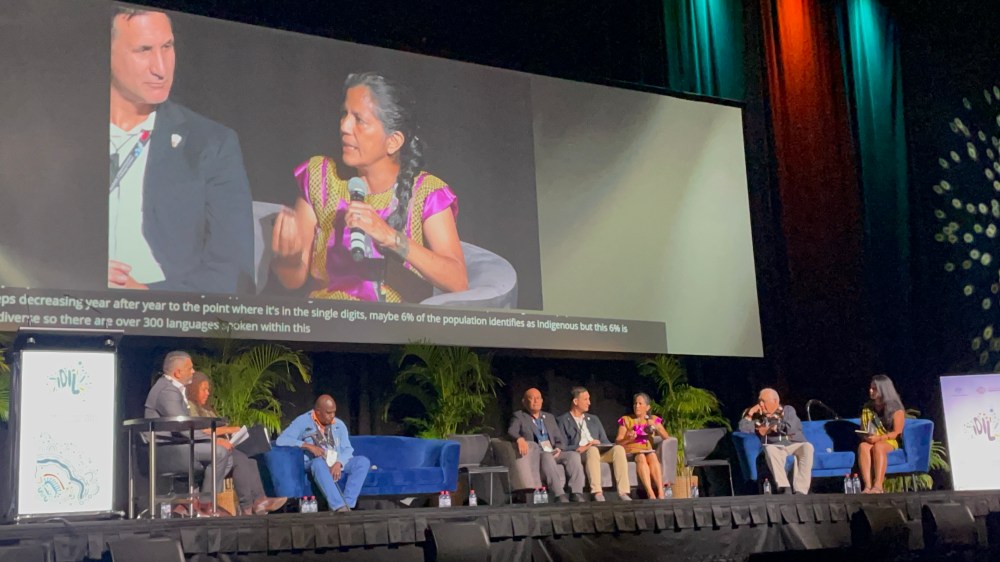
Photo by Stella Beerman, Myaamia Center.
You can watch the entire kick-off on YouTube or skip to the 50:00 mark to see the panel discussion.
At the end of the week, Gabriela presented on National Breath of Life and the work this organization does to develop and provide training and electronic tools for archives-based research for language revitalization. By sharing this work with communities interested in archives-based language research across the globe, we hope to connect with these communities and make their journey to finding their process easier, more efficient, and more effective. We also hope that by connecting with these communities we can gain insights to make our own organization stronger and provide additional resources and opportunities to our participants.
Archive-based research for revitalization is a growing field internationally. As more Indigenous communities turn towards archival materials to support language and cultural learning opportunities in their communities, National BoL is leading research in the field to aid in the development of these archives.
At National Breath of Life, we acknowledge that our communities are stronger when we work together to share our knowledge and skills. This work requires the intentional time and effort of many individuals to be successfully maintained. This conference exemplifies this value by broadening our horizons and allowing us to connect with Indigenous communities and language resources at a global level.
 National Breath of Life Blog